

SEVILLE IN FLAMENCO When the Whole City Begins to Dance XXIV Bienal de Flamenco · 9 September–3 October 2026

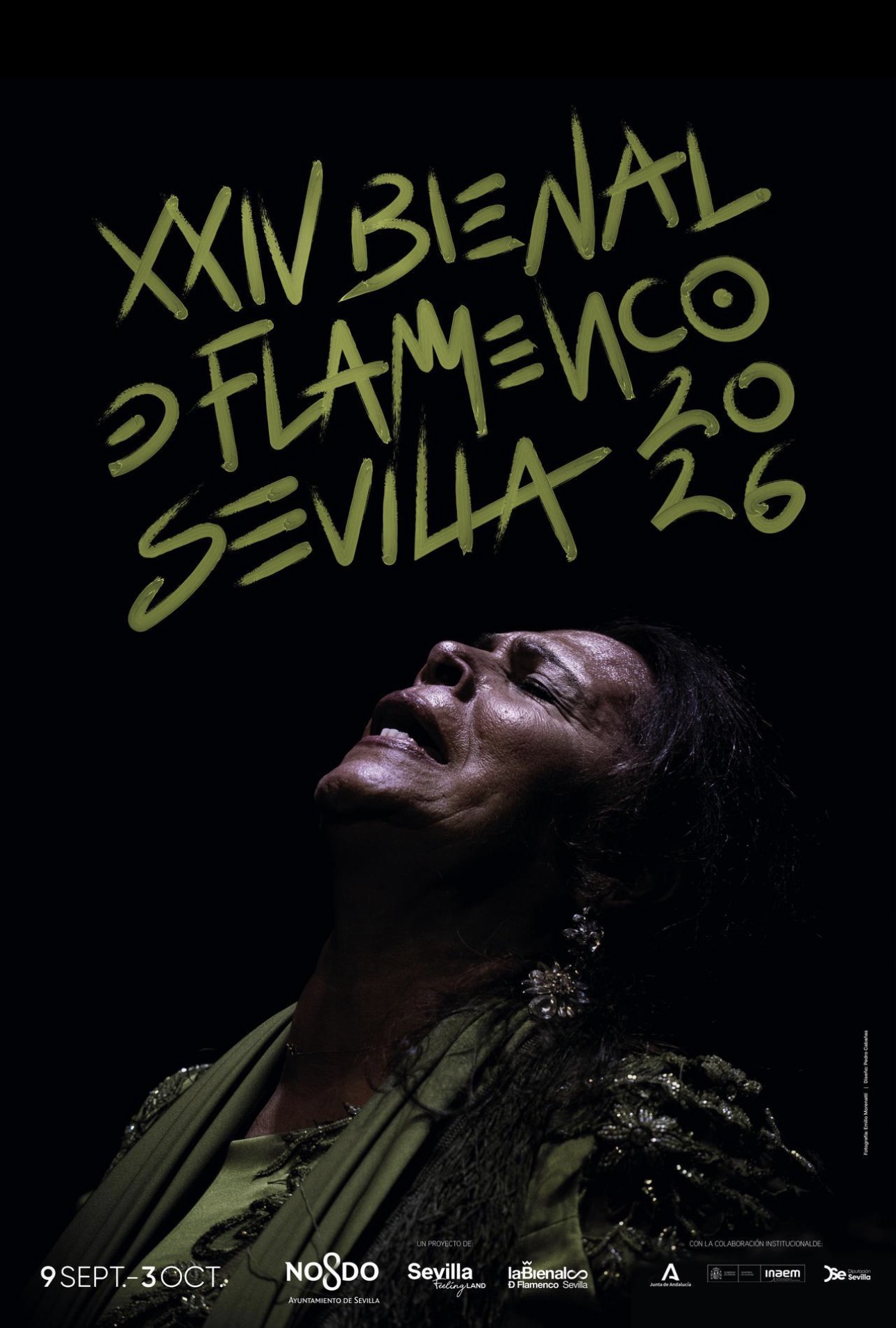

SEVILLE IN FLAMENCO
When the Whole City Begins to Dance
XXIV Bienal de Flamenco · 9 September–3 October 2026
There are cities that host festivals.
And then there is Seville, which simply becomes one.
From 9 September to 3 October 2026, the XXIV Bienal de Flamenco will take possession of the city – politely at first, and then with heels, guitars, raised eyebrows and enough emotional intensity to make even a German timetable feel something.
For twenty-five nights, flamenco will move through Seville like an invisible current.
It will slip beneath theatre doors, echo across palace courtyards, settle into the arches of the Real Maestranza and rise again from the old industrial bones of the Real Fábrica de Artillería.
More than seventy performances will unfold across eleven venues, bringing together over one hundred artists and almost every possible version of flamenco: ancient and experimental, intimate and spectacular, whispered and defiantly shouted into the Andalusian night.
This is not merely an event.
This is Seville remembering who she is.
A City with Duende in Its Blood
Trying to explain flamenco to someone who has never felt it is rather like trying to describe love using an Excel spreadsheet.
Technically possible.
Emotionally useless.
Flamenco is not simply music accompanied by dance. It is pride, grief, seduction, memory and rebellion compressed into a voice, a guitar string or the precise moment a heel strikes the floor.
In Seville, it is also part of the city’s nervous system.
It lives in Triana, in family gatherings, in late-night bars and in those moments when someone begins to clap a rhythm and everybody else somehow knows what comes next.
A German may ask:
“Was this rehearsed?”
A Sevillano will look genuinely confused by the question.
The Bienal takes this deeply rooted art and places it on the world stage without removing its soul. It brings together the flamenco inherited from previous generations and the restless artists determined to pull it into the future.
Tradition is respected.
But it is not placed behind glass.
One Hundred Years of Reinvention
The 2026 Bienal looks back to the generation that transformed flamenco during the 1920s – artists whose work changed the way the world listened to cante, guitar and dance.
This was flamenco’s own cultural revolution, often compared to Spain’s literary Generation of ’27. Figures such as La Niña de los Peines and Pepe Marchena carried flamenco beyond familiar boundaries and helped turn it into a modern theatrical art.
A century later, the Bienal is not presenting that history as a museum lesson.
It is asking a much more interesting question:
What happens when today’s artists inherit a revolution?
The answer appears throughout a programme that places legendary voices beside radical choreographers, traditional forms beside electronic sound and historic venues beside new creative languages.
This is heritage wearing excellent shoes and refusing to sit quietly.
Sara Baras and an Inauguration Called “Infinita”
Among the most anticipated moments is Sara Baras and the premiere of Infinita, a work created especially for the Bienal.
The production pays tribute to the eight Andalusian provinces through female figures – an idea that feels both deeply rooted and unmistakably contemporary.
Baras does not merely dance flamenco.
She commands space.
Every movement appears carved rather than performed. A turn becomes a declaration. A pause becomes suspense. One raised arm can contain more drama than an entire season of television.
By late August, more than thirty Bienal performances were already sold out, with Infinitaamong the productions attracting enormous attention.
Seville has clearly decided that September will not be spent quietly at home.
The Real Maestranza: When the Arena Changes Its Rhythm
The Real Maestranza is one of Seville’s most emotionally charged spaces. Usually associated with bullfighting, ceremony and centuries of Andalusian symbolism, it becomes a monumental stage for the Bienal.
Here, the opening celebrations connect one hundred years of flamenco history with artists including José Mercé, José de la Tomasa, Martirio, Arcángel, La Tremendita, Ángeles Toledano and the Ballet Flamenco de Andalucía with Patricia Guerrero.
It is difficult to imagine a more Sevillian setting.
The golden arena.
The white arches.
The evening air.
And voices carrying upwards into the night as though the building itself had finally decided to sing.
No PowerPoint presentation could compete.
The Return of the Lope de Vega
One of the most emotional stories of this Bienal is the return of the Teatro Lope de Vega.
After a long closure, the beloved theatre reopens its doors as one of the festival’s principal stages. It is more than a practical return to the programme; it feels like a cultural homecoming.
The Lope de Vega has the kind of old-world elegance that makes people naturally lower their voices when they enter.
Red velvet. History. Expectation.
During the Bienal, that silence will not last long.
Aurora Vargas, Juana Amaya, Rafael Riqueni and other major artists will bring the theatre back to life, while Dorantes presents a new work created for its reopening.
A theatre waking from sleep to the sound of flamenco feels almost too poetic to be true.
But this is Seville.
The city considers poetry a perfectly reasonable form of urban planning.
Hotel Triana Returns
After four years away, Hotel Triana returns to the Bienal for three special nights from 17 to 19 September.
Despite its name, Hotel Triana is not a place where one checks in and complains about the minibar.
It is a historic communal courtyard and one of the most atmospheric spaces associated with the festival.
Its return brings three programmes devoted to Gypsy women, the flamenco heritage of Los Palacios and artists from all eight Andalusian provinces whose contributions deserve renewed attention.
The first evening, Mujeres gitanas, features Remedios Amaya, La Fabi and Montse Cortés, accompanied by Josemi Carmona.
This is precisely where the Bienal becomes more than a parade of famous names.
It makes space for memory.
For communities.
For voices that may not always occupy the largest stages but carry entire histories inside them.
Flamenco Goes Underground
At the Real Fábrica de Artillería, Ana Morales presents the world premiere of Rapsodia. Fantasía subterránea.
The production imagines a descent through the underground passages of a fictional Seville. Flamenco meets contemporary dance, improvisation, electronic sound and the experimental voice of Niño de Elche.
In other words, anyone expecting only red dresses and castanets may need a brief lie-down.
This is flamenco entering the labyrinth.
The old artillery factory provides the perfect setting: industrial, historic and slightly mysterious. Its stone passages become part of the performance, transforming the building into an emotional landscape.
It demonstrates precisely why the Bienal matters.
Flamenco survives not by repeating itself perfectly, but by remaining brave enough to become unfamiliar.
Eleven Stages, One Extraordinary City
The venues are not simply containers for performances.
They are part of the cast.
The Real Alcázar offers moonlit intimacy and centuries of architectural beauty. Teatro Central welcomes some of the festival’s most experimental voices. Teatro Alameda brings generations together. The Real Fábrica de Artillería allows flamenco to collide with contemporary art, while the Lope de Vega supplies velvet, history and theatrical glamour.
Then there are the streets.
Because flamenco in Seville has never understood the concept of staying neatly indoors.
Parallel activities, exhibitions, films and outdoor performances carry the Bienal beyond the ticketed stages. The city becomes an open cultural map where a morning coffee may be followed by an exhibition, an afternoon talk and a performance that ends long after any sensible German bedtime.
Seville does not apologise.
Seville orders another round.
What Should One Wear?
This is not a minor question.
The Bienal is not the Feria de Abril, and arriving dressed as an entire caseta would be excessive.


Even for Seville.
The mood is more artistic than folkloric: beautifully cut black, sculptural jewellery, a strong lip, an elegant fan and perhaps one dramatic detail that moves when you walk.
Think contemporary Andalusian glamour.
Not costume.
For men, a dark jacket, an open collar and excellent shoes will carry almost any evening. For women, a fluid dress, tailored trousers or a striking blouse can feel completely appropriate.
The true accessory, however, is confidence.
Flamenco recognises hesitation immediately.
Where to Begin
With more than seventy performances, nobody should attempt to attend everything unless they have supernatural stamina and a personal sponsorship agreement with café solo.
Choose contrasts.
See one great traditional voice.
One major dance production.
One experimental premiere.
One performance inside a historic setting.
And one artist whose name you have never heard before.
The familiar names offer excellence, but discovery is part of the Bienal’s magic.
Buy tickets early. Many performances are already heavily booked or sold out. Look beyond the most obvious dates and explore the smaller venues and parallel programme.
The night that surprises you may become the one you remember.
Seville, Profoundly Local and Completely Universal
Bienal director Luis Ybarra has described the 2026 edition as profoundly Sevillian and universal.
That apparent contradiction is exactly the point.
The more confidently flamenco inhabits its origins, the more powerfully it travels.
A voice shaped in Triana can move someone in Tokyo.
A rhythm inherited in Cádiz can fill a theatre in New York.
A dance created in Seville can speak to anyone who has ever desired, grieved, resisted or begun again.
No translation is required.
Duende does not need subtitles.
The Expat Press Verdict
The XXIV Bienal de Flamenco is not something to observe politely from a distance.
Enter it.
Allow yourself to choose a performance without fully understanding what awaits you. Sit in an old theatre. Walk home through warm streets afterwards. Listen to strangers debating the evening over wine and tapas.
Notice how the rhythm remains in your body.
For almost a month, Seville will sing through theatres, courtyards, factories, arenas and streets.
There will be glamour.
There will be experimentation.
There will be dresses capable of creating their own weather.
And somewhere between the first guitar note and the final heel strike, visitors may understand something Sevillanos have always known:
Flamenco is not simply performed in Seville.
It is how the city remembers, rebels, seduces and survives.
From 9 September to 3 October, the whole city begins to dance.
Try to keep up.